Why AI Memory Is Broken — And What It Actually Takes to Fix It
If you have ever worked seriously with AI tools, you have probably tried to build your own memory system.
Maybe it was a folder of markdown files you fed into context. Maybe it was a vector database with a retrieval layer on top. Maybe it was an elaborate note-taking system that you kept perfectly synchronized with your AI workflow for about three weeks before it quietly fell apart.
You are not bad at this. The tools are.
The Guardrail Illusion: Why Asking AI to Police Itself Is Not a Security Model
In my last two posts, I argued that autonomous AI agents without a verifiable application boundary are a hazard, and that the answer is an architecture built like an organism — with a mind to reason, a body to act, a forge to adapt, and a nervous system to hold it all together.
Today I want to talk about the part of that organism most companies are getting catastrophically wrong: security.
The Architecture of Intent: Introducing Omni, Takumi, and the Mushin Philosophy
In my last post, I warned against the Agentic Mirage — the dangerous assumption that unleashing swarms of autonomous AI agents constitutes an enterprise strategy. I argued that discarding the software application in favor of an AI-centric free-for-all removes the very environment where human intuition, strategy, and accountability live.
The response I kept hearing was a fair one: if not autonomous agents, then what? What does an AI-First, Human-Centric enterprise actually look like in practice?
Today I want to answer that by opening the hood on what we are building at Nandeshou.
We are not building a better chatbot, or even a better agentic harness. We are re-architecting how humans and machines collaborate to run an enterprise. To do it properly, we had to build an organism, not a platform — with a mind to reason, a body to act, a forge to adapt, and a nervous system to hold it all together.
AI-First is Not AI-Centric: Why We Cannot Forget the App
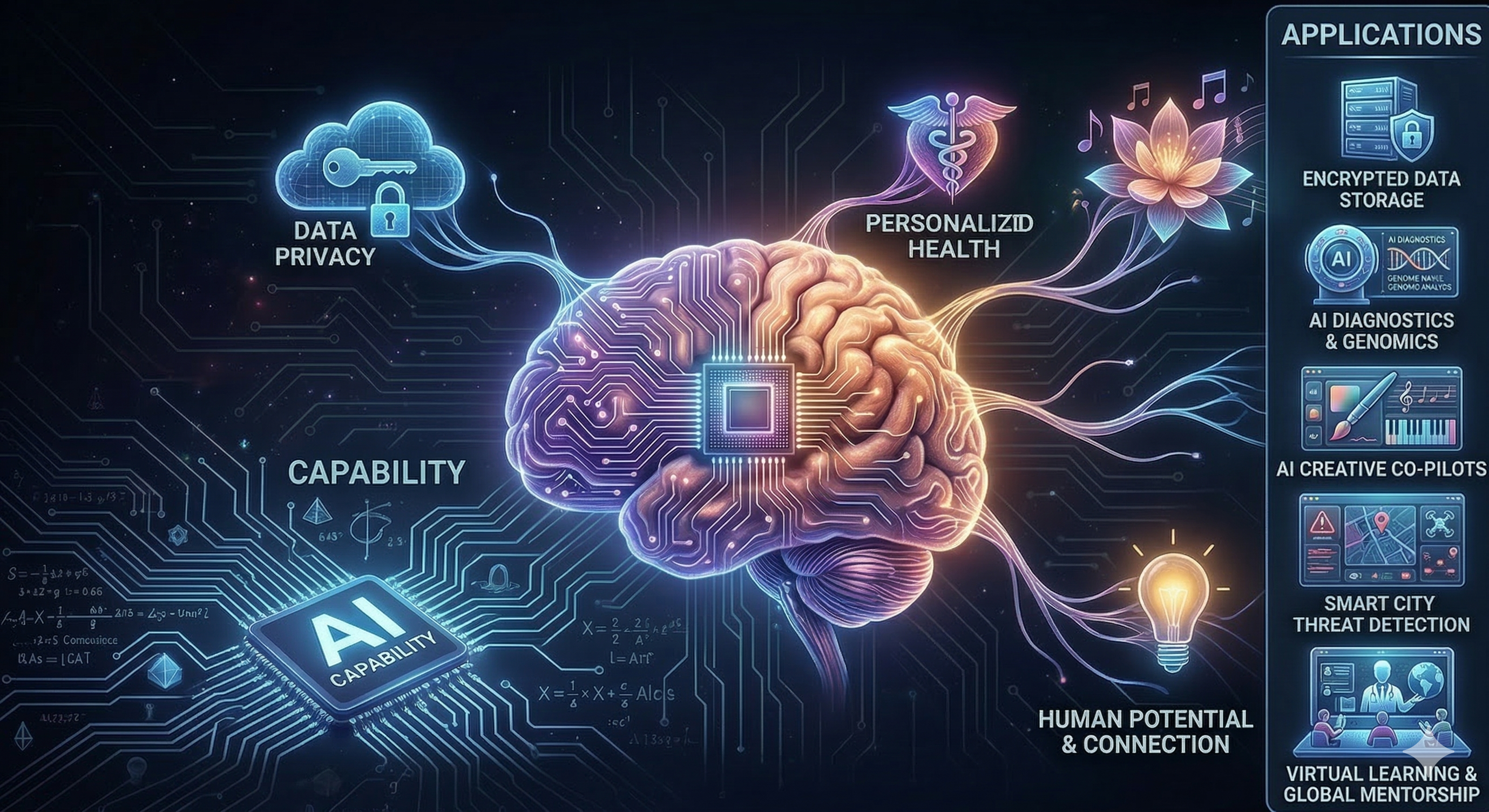
In the history of technology, the word “First” has always denoted a design priority, not a blind obsession with a single feature.
Architecture is Destiny: Why the Cloud Era is Reaching its Logical Conclusion

In mission-critical engineering, there is a fundamental rule that even the most visionary leaders often discover the hard way: the architecture that makes an organization dominant in one era is the exact same architecture that traps it.
Ideas!
We start with your project idea, no matter how rough. From there, we help you refine it into a clear, actionable plan through iterative communications, whether that’s via online meetings, chat messages, or email threads.
Remote Services

This is a bit of a technical deep dive, but if you’re interested in the internal workings of Nandeshou then hopefully you’ll enjoy this insight.
When I began implementing Nandeshou, the initial services were all in a single process, so if a service needed to return another service then I could return a reference to it and it worked great. Until it didn’t.