In the history of technology, the word “First” has always denoted a design priority, not a blind obsession with a single feature.
A decade ago, the industry shifted to a “Mobile-First” philosophy. We did not do this because the smartphone was a novelty. We did it because the constraints of a smaller screen and a touch interface forced us to prioritize the most essential functions of our software. Designing for mobile first ensured that the core utility of an application was sound. If a workflow succeeded on a five-inch screen, it would thrive on a twenty-four-inch monitor.
Today, we are witnessing a significant misunderstanding of the next great architectural shift. The industry is rushing toward an “AI-Centric” model — and in the process, many are discarding the very thing that made software useful in the first place.
The Agentic Mirage
The current trend is to replace structured applications with disorganized clusters of autonomous agents expected to run every business process. The promise being sold to executives is intoxicating: describe what you want in a chat window and the machine will figure it out.
This approach forgets the fundamental purpose of software. An application exists to provide a structured, deterministic environment for a human to achieve a specific goal. It has a body, a boundary, and a predictable outcome. When you abandon that structure in favor of agents operating without a clear application framework, you are not building a smarter system. You are building a more confident one — and confidence without correctness is exactly how mission-critical failures happen.
Consider what this looks like in practice. A company builds an agentic workflow to manage supplier payments. No formal rules, no deterministic logic, just an AI that’s been told what the outcome should be. The agents operate plausibly — until an edge case arrives that was never in the training data. There is no application layer to catch it. There is no structured interface where a human can intervene. By the time the error surfaces, it has already propagated through the system.
This is the natural consequence of automating processes that were never properly architected in the first place.
AI-First, Human-Centric
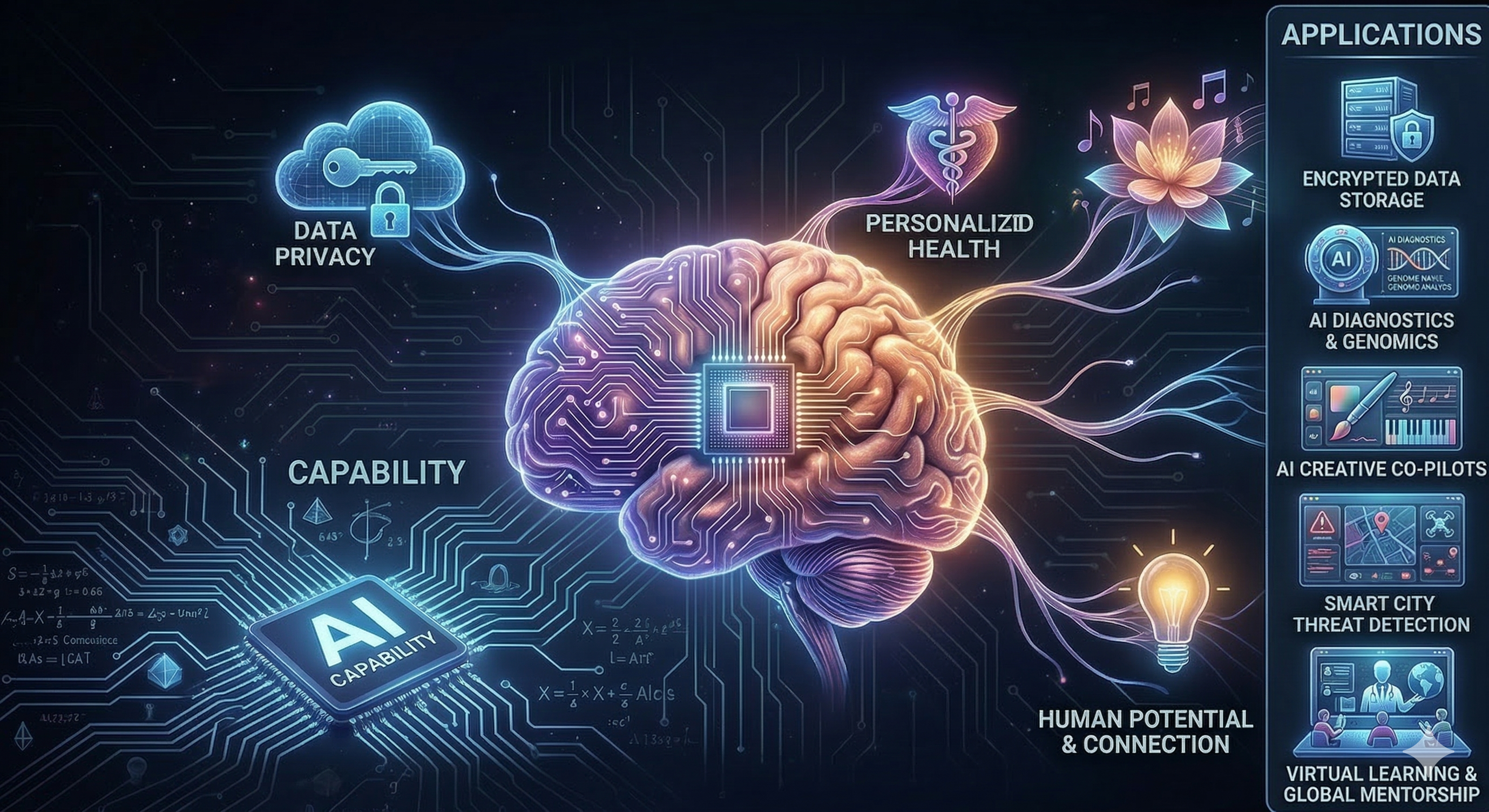
At Nandeshou, we believe in being AI-First — but we remain fiercely Human-Centric.
Being AI-First means we architect our systems with the assumption that machine intelligence will be the primary navigator of the logic. We build the application — the unified logical fabric — from the ground up to be readable and actionable by AI. We do not bolt a chatbot onto a legacy database. We design infrastructure to be AI-native at the atomic level.
But we never forget the App.
The application is the vital bridge between machine processing power and human strategic intent. It is where human intuition meets data, and where accountability lives. Remove the structured application layer and you remove the human’s ability to apply their judgment, intervene when something is wrong, and ultimately own the outcome. Automation without accountability is just liability with a faster clock speed.
The Architect’s Responsibility
The leaders who will build durable companies in this era are not the ones who replaced their workforce with unverified agents. They are the architects who used AI to build more powerful, more coherent, and more responsive applications — systems where the machine handles the complexity and the human retains control of the outcome.
Use AI for the heavy lifting: the boilerplate, the synthesis, the pattern recognition. But keep the application as the stable, verifiable environment where the rules are explicit, the behavior is auditable, and the human remains the final authority.
We are not moving toward a world without software. We are moving toward a world where software is finally intelligent enough to earn the trust we place in it. That requires building it correctly — AI-First in its intelligence, Human-Centric in its purpose, and grounded in the deterministic foundations that make verification possible.
The application still matters. The human still leads. Those aren’t constraints on AI — they are the conditions that make it worth trusting.